
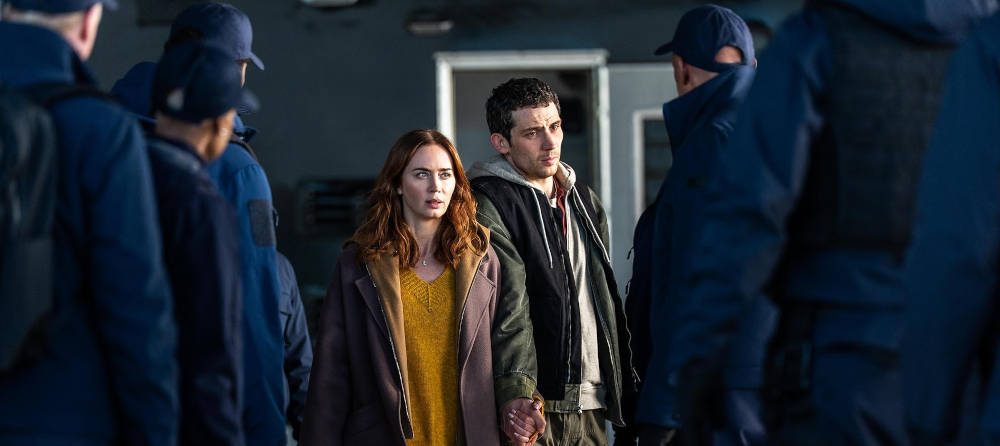
Spielberg’s 36th feature film as director is a blockbuster science fiction yarn with a large marketing budget. It’s hard to believe this is the director of science fiction classics like ET, Jurassic Park, and Minority Report, because Disclosure Day disappoints in every area of film.
The premise teases a question about whether to reveal first contact with otherworldly beings. It centers on two human characters—Emily Blunt’s weather reporter Margaret Fairchild and Josh O’Connor’s computer scientist Daniel Kellner—who are in some way central to this first contact.
The story was devised by Spielberg and turned into a script by David Koepp. The two previously collaborated on the revered crowd-pleaser Jurassic Park. But they also collaborated on Jurassic Park 2: The Lost World, often called Spielberg’s worst movie. The first contact storyline is one of the most common in science fiction movies, and Spielberg himself directed two of the genre’s classics, ET and Close Encounters of the Third Kind. So it’s hard to understand how anyone involved thought this contrived, hackneyed treatment is a meaningful contribution to the genre.
It opens with no less than five tropes, including a mysterious powerful object, a shadowy quasi-governmental organization, people needing to go off the grid, characters who know a secret but dramatically avoid giving specifics, and an innately beneficent nun who helps without asking questions. That’s just the first fifteen minutes.
The storytelling continues on rails, and the characters it draws range from clichéd to superfluous. Eve Hewson’s character is plainly named Jane (as in Doe) but she could have been named Martyred Girlfriend. She’s rescued from a kidnapping in the first 5 minutes, but so perfunctory is her character that we’re not told how she was kidnapped or what she went through, even though we see her injured. Later she is mind-controlled to divulge information against her will, in a scene reminiscent of torture. Mostly, she executes actions necessary for the plot to reach the reveal.
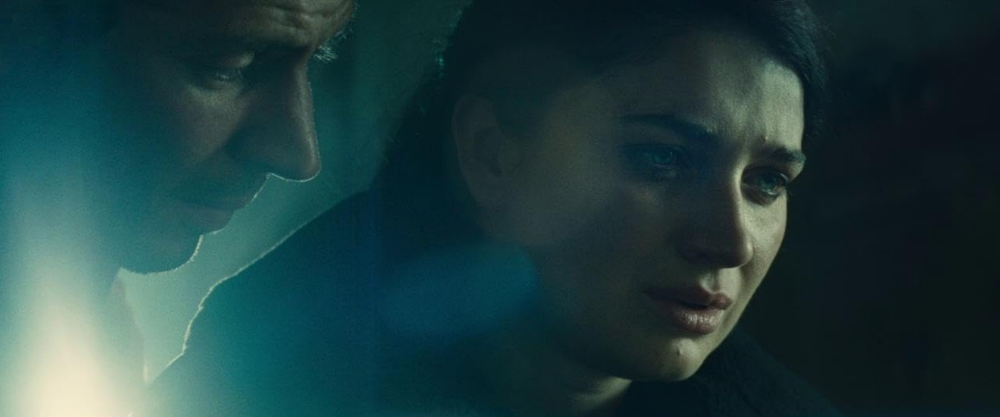 Eve Hewson's Jane featured here not because the character is meaningful, only because she deserved better.
Blunt’s weather forecaster is flighty, and learning of her role in Disclosure Day (D day, get it?) gives her aimless life purpose. Later, the savior nun gives wise perspective that changes a character’s thinking, and is never heard from again. If you’re reading bad roles for women, you’re reading right. It so leans into gender stereotypes as to give its mathematical revelation to its male character, and its empathic revelation to the woman. Uff.
The male characters have more purpose and drive, but no nuance. Colin Firth has zero subtlety as the agency head trying to suppress the secret, even wearing a black turtleneck with glasses. Colman Domingo’s one note is mysterious benefactor, with no reason for the mystery. Off the cryptic calls, he’s coordinating an organization. Josh O’Connor’s scientist has a lead role but makes no decisions after the start. He’s part exposition delivery, part reaction vehicle, with lines like, “you wouldn’t believe what I know”, or “why me”, or “I don’t understand what’s happening”.
The movie momentarily wanders into its premise. Two characters debate the impact of revealing the secret. This lasts for one minute, before the story, with no additional information or events, proceeds as if the debate reached a conclusion. This is a missed opportunity to have a discussion worthy of our time. In an era where we disclose so much online, has it really helped us? Establishing a sincere difference in perspective would have given the climax tension that it sorely needed.
Even the revelation disappoints. The movie ignores the last 40 years of first-contact movies and television, acting is if this is the first time such a story has been put forth. It gives a breathless reaction to images that were already blasé when The X-Files aired. Picture the History Channel and Mars Attacks and you’ll be in the aesthetic motif of Disclosure Day. Worse still, the reveal at the end of the movie turns out to be little different from the one at the beginning.
It also seems detached from the mobile device era it’s set in, conveniently ignoring modern technology and lifestyles. Today, if you’re eager to broadly disclose something, you post it on social media. We’re reminded, cajoled, warned to get all our data into the cloud. A character at the beginning says, “I should just dump everything online right now”. He’s simply instructed not to, as if this is sufficient reasoning in a post-Wikileaks world, and he holds onto the information for two interminable hours of screentime. If they’d used Instagram at the start, this could have been a Meta ad.
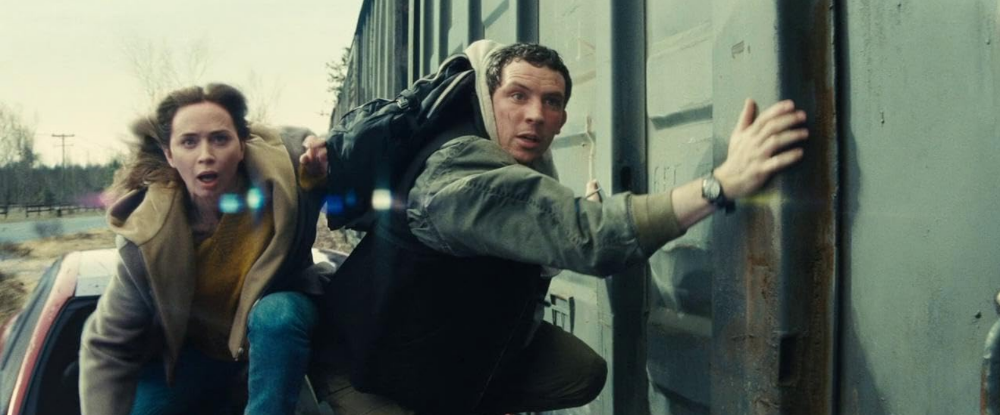 Appropriately includes train wreck scene
The chase avoids modern tech too. Firth’s antagonist uses special off-world powers to keep locating the protagonists. That’s because the protagonists know (mostly) to not use their cellphones. But we now live in a world of facial recognition, street cameras, and automated license plate readers. None of this is used. Maybe the movie was pursuing a feeling of timelessness, but there was better pursuit tech depicted ten years ago in Jason Bourne.
Somewhere in here is a much simpler movie I wanted to see. Blunt’s portrayal of a weather forecaster unhappy with her life was charming and set up a good relationship problem. It would be great to see how Margaret Fairchild navigates her personal crisis absent a celestial crisis. How would she and her husband sort through their different desires in lifestyle? Their interaction was the humor in a broader tone of dreary self-seriousness, in particular where she read his mind on the run.
This tedious, poorly structured story is part X-Files, part Heroes, all mid-quality television series. It has the maddening disregard for logic of Independence Day, without any of the silly fun. You’ve seen all the parts of Disclosure Day before, except they were done better elsewhere.
